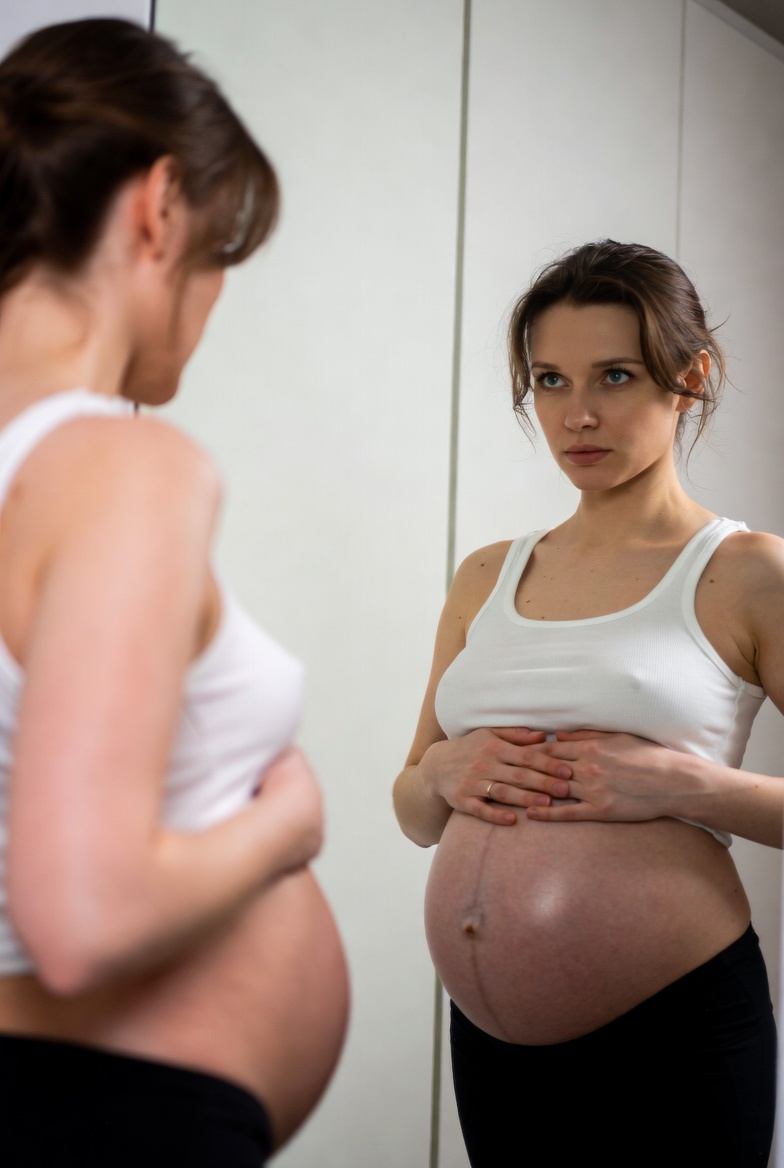
Nobody warns you about the bloating. Or the way your jeans stop fitting by day 7 of stim injections. Or how you can go from feeling like yourself to feeling like a stranger in your own body within a single treatment cycle.
Fertility treatments, particularly IVF and ovarian stimulation, change your body temporarily. And when you are going through those changes without a partner to reassure you, the emotional impact can be surprisingly intense.
Let's talk about what is actually happening, what the research says, and how to stay grounded when your body feels like it belongs to someone else.
What Happens to Your Body During Treatment
During a typical IVF stimulation cycle, your ovaries are working overtime. Medications like FSH and LH stimulate multiple follicles to grow simultaneously, which means your ovaries can swell from the size of an almond to the size of a grapefruit.
The physical side effects are real:
- Bloating is the most common complaint. Your abdomen may feel (and look) noticeably distended, especially in the days leading up to egg retrieval.
- Breast tenderness from elevated estrogen levels.
- Mood swings that can feel dramatic and disorienting.
- Fatigue that goes beyond normal tiredness.
- Pelvic pressure and discomfort as follicles enlarge.
About one in three women (33%) experience symptoms of mild ovarian hyperstimulation syndrome (OHSS), which includes bloating, nausea, and abdominal discomfort. Severe OHSS is rare, occurring in less than 1% of cases, but mild symptoms are extremely common.
The Weight Question
One of the biggest fears women have about IVF is weight gain. The reality is more nuanced than the fear.
A 2024 study published in Frontiers in Reproductive Health found that mean weight changes during IVF were clinically non-significant for most women. Total weight change averaged less than 1% of initial body weight, well below the clinically significant threshold of 5 to 7%.
However, individual experiences vary. Some women report gaining 5 to 15 pounds during a stimulation cycle. The important thing to understand is that this is primarily fluid retention, not fat gain. Your body is retaining water in response to hormonal changes and ovarian activity. Most of this weight resolves within one to two weeks after your cycle ends.
Knowing this does not necessarily make it easier to look in the mirror. But it can help to remind yourself that what you are seeing is temporary and physiological, not permanent.
The Emotional Impact
The physical changes are one thing. The emotional fallout is often harder.
Research published in Human Reproduction in 2024 found that body-image distress is significantly increased in women experiencing infertility. The study described infertility as "a severe insult to self-esteem, body image, and self-assessed femininity." Women presenting for IVF were more depressed, had lower self-esteem, and were less confident than a control group of fertile women. After a failed cycle, those feelings intensified further.
Anxiety and depression rates among women in fertility treatment range from 23% to 76% for anxiety and 11% to 56% for depression, with body image distress serving as a significant mediating factor between infertility and mental health.
The Solo Factor
Here is what makes this harder for solo moms by choice: going through physical changes without a partner's reassurance adds a layer of vulnerability.
A 2023 study in Frontiers in Psychology found that attachment and interpersonal support play key roles in body image during infertility. Women without secure romantic attachment may experience more negative body image when their interpersonal support needs go unmet. When there is no partner to say, "You are beautiful and this is temporary," you have to generate that reassurance internally or find it elsewhere.
This is not a weakness. It is a reality that deserves acknowledgment and a plan.
How to Stay Grounded
Normalize the Changes
Everything you are experiencing has a medical explanation. The bloating is follicular fluid and ovarian enlargement. The weight is water retention. The mood swings are elevated estrogen and progesterone. Your body is doing exactly what the medications are asking it to do, and that is a sign that things are working.
Dress for Comfort, Not Punishment
This is not the time to force yourself into your pre-treatment clothes. Invest in a few comfortable pieces that fit your body as it is right now. Soft waistbands, stretchy fabrics, clothes that make you feel good rather than restricted. This is a temporary season, and dressing for it is an act of kindness to yourself.
Move Gently
Exercise during stimulation should be gentle, no high-impact workouts or heavy lifting (your ovaries are enlarged and at risk of torsion). But movement helps with bloating, mood, and body connection. Walking, gentle yoga, and swimming are good options. The goal is to stay in your body rather than disconnecting from it.
Talk to Someone
Whether it is a therapist, a friend who has been through treatment, or your solo mom community, talking about how you feel is one of the most effective coping strategies. You do not need to perform strength. You can say, "I feel awful in my body right now," and let someone hold space for that.
Reframe the Narrative
Try this: instead of "My body is betraying me," try "My body is doing something extraordinary." You are growing follicles. You are creating eggs. You are giving your future child their start. The discomfort is not punishment. It is the physical cost of something remarkable.
The Bottom Line
Fertility treatments change your body temporarily, and the emotional impact of those changes is real and valid. You do not have to pretend you feel great. But you also do not have to let a temporary physical state define how you see yourself.
Your body is doing hard, important work. Treat it with the same compassion you would show your best friend if she were in your shoes.
Struggling with the emotional side of treatment? Book a session with me to process what you are going through with someone who understands.